

In This Article
- How much calcium older adults really need
- Non-dairy, high-calcium foods on the everyday table
- Why vitamin D and movement help calcium reach your bones
Bone loss creeps in quietly with age, and a single fall can lead to a fracture. Many older adults skip milk because of lactose intolerance or simple taste, and worry they cannot get enough calcium. The good news: the everyday table offers plenty of natural, calcium-rich choices.
Why calcium matters more with age
Bone density declines year by year after midlife, and loss speeds up for women after menopause. Health authorities suggest adults aim for around 1,000 mg of calcium daily, yet many seniors take in far less. Beyond bone strength, calcium supports muscle and nerve function, so a long-term shortfall raises the risk of osteoporosis and fractures.
Non-dairy foods rich in calcium
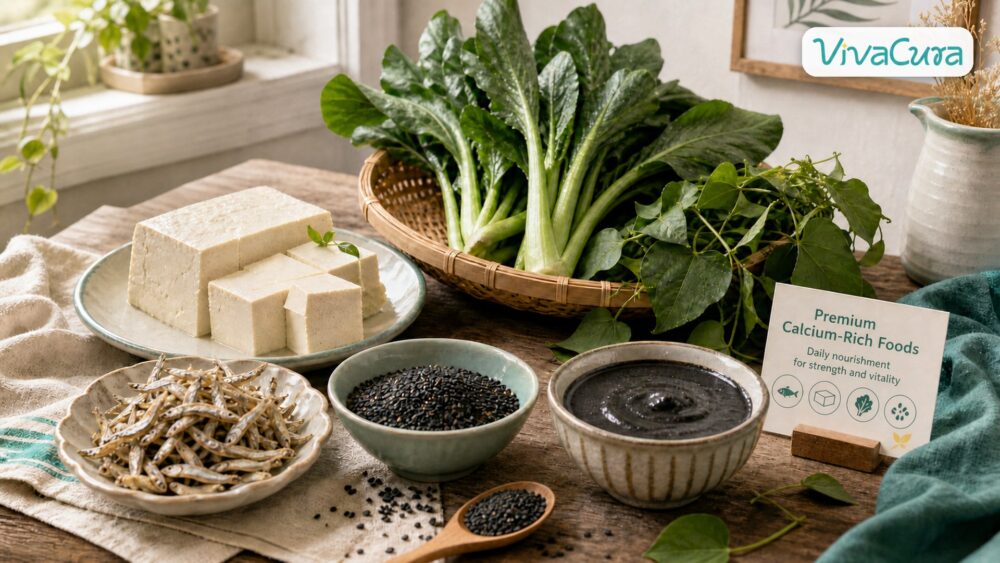
Skipping milk does not mean falling short. Dried anchovies (xiaoyugan), eaten whole with their bones, are remarkably calcium-dense. Firm tofu set with calcium sulfate is an affordable, everyday source. Black sesame and sesame paste are also rich in calcium and easy to stir into rice or vegetables. Woven into daily meals, these foods make calcium simple.
Dark leafy greens: an underrated ally
Chinese kale, sweet potato leaves, amaranth, and bok choy offer calcium along with vitamin K and fiber. Cooked together with tofu or dried anchovies, they broaden your calcium sources. Aim for at least one serving of dark greens each day, so nutrition and calcium arrive together.
A small change at Carmen's table
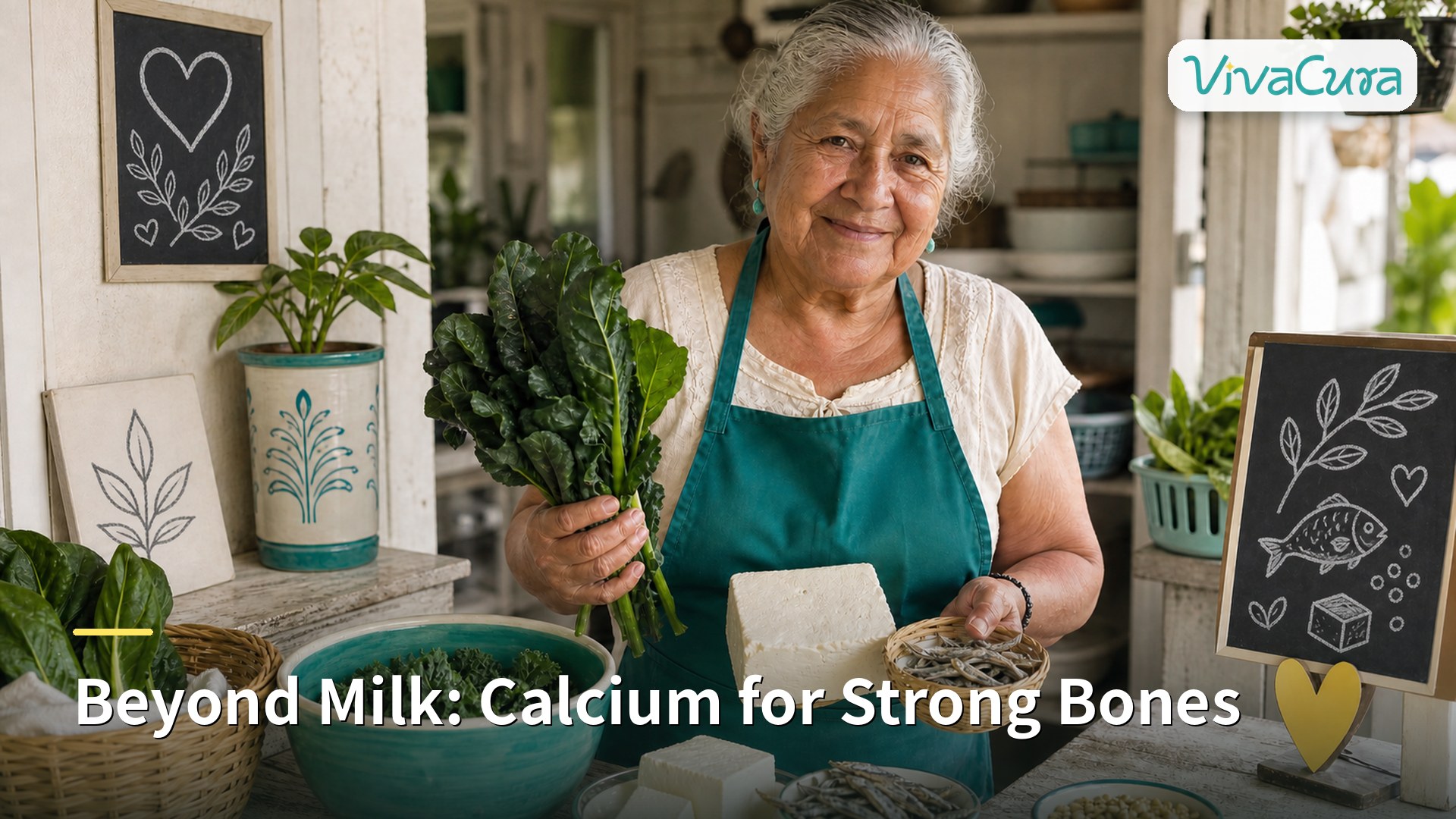
Carmen (a pseudonym), 74 and originally from Latin America, learned her bone density was low. Rather than reaching straight for pills, she started with food: black sesame soup at breakfast, firm tofu and dark greens at lunch, and a sprinkle of dried anchovies in her soup. Six months later, her nutrition and energy had improved, and she felt more confident caring for herself.
Vitamin D and exercise: the missing pieces
Getting calcium is only half the story; it needs help settling into bone. Vitamin D aids calcium absorption, and about 10 to 15 minutes of daily outdoor activity in sunlight helps the body make its own. Weight-bearing exercise such as brisk walking, tai chi, or light resistance training stimulates bone and preserves muscle, lowering the risk of falls.
Supplements: use them wisely
Consider calcium or vitamin D supplements only when diet falls short. Excess intake may raise the risk of kidney stones and other concerns, so discuss dosage and any drug interactions with your doctor or pharmacist first. A food-first, supplement-second approach is gentlest on the body.
Building bone is a lifelong task, and it is never too late to start with today's meal. VivaCura's Cura care notes are here to help you weave good nutrition into daily life. If a loved one's bone health is on your mind, we welcome you to reach out for professional nutrition and care guidance, so every meal feels a little more reassuring.
Further Reading
- Beating Sarcopenia: Quality Protein for Seniors
- Vitamin B12 and Cognition: A Nutrient Older Adults Often Miss
References
- Taiwan Health Promotion Administration (HPA): Bone Health and Calcium
- Taiwanese Osteoporosis Association: Calcium and Vitamin D Intake Recommendations
- NIH Office of Dietary Supplements: Calcium and Vitamin D Fact Sheets
- USDA FoodData Central