

In this article
- Stop counting calories first—ratio matters more
- One picture: the balanced-plate split
- Why ratio beats total calories
- Carbs aren't the enemy—and more protein isn't always better
- A real example: one office worker's lunchbox makeover
- 3 tweaks you can make today
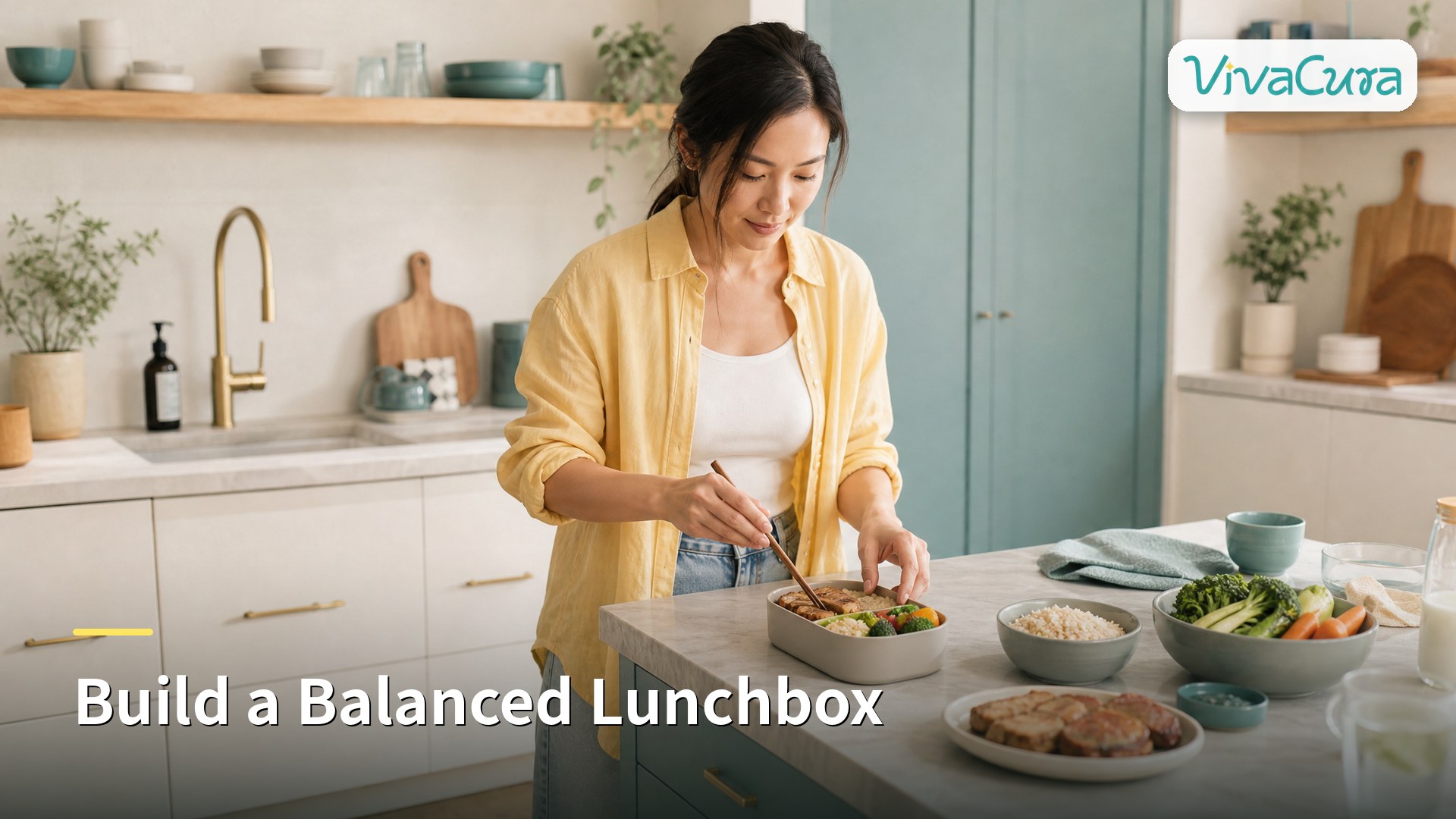
You pack your own lunch to eat better, but somehow you end up drowsy by mid-afternoon—or bloated the next morning. When people build their own meals, the thing that trips them up most is a single word: ratio. The good news? You don't need a kitchen scale or a calorie chart. One mental picture and the size of your own hand will get you most of the way there.
Stop counting calories first—ratio matters more
Most people start a meal-prep habit by looking up calories, and quickly feel boxed in. But what actually decides whether you crash in the afternoon or reach for snacks isn't the calorie count—it's how your three main food groups are balanced against each other.
Shift your attention from numbers to proportions, and eating well suddenly feels intuitive.
One picture: the balanced-plate split
Picture your lunchbox in four parts: one-third whole grains, one-third vegetables, and the last third split in two—half lean protein (beans, fish, egg, or meat) and half fruit.
An even easier cue is the hand-portion method: vegetables a fist or more, whole grains about a fist, protein about a palm, and fruit about a fist, with a serving or two of dairy across the day. A portion you can see always beats a number you have to weigh.
Why ratio beats total calories
Counting only calories walks you straight into the empty-calorie trap. Three bowls of white rice can hit your calorie target too—but with almost no protein, you'll be hungry by afternoon and slowly lose muscle over time.
Protein gives your body the raw material to repair and grow, and it keeps you full far longer than starch. Carbohydrates, meanwhile, are your brain's main fuel. They're teammates, not rivals.
Carbs aren't the enemy—and more protein isn't always better
Cutting carbs entirely has become fashionable, but going very low for too long tends to leave people irritable and prone to overeating at the next meal. Instead of quitting carbs, swap in slower-digesting whole grains—brown rice, sweet potato, quinoa.
More protein isn't automatically better, either. A palm-sized serving per meal is usually all your body can put to good use; the excess doesn't top you up any further. Balance is the point.
A real example: one office worker's lunchbox makeover
One reader used to bring a convenience-store rice ball plus a single chicken breast—and hit a shaky, sugar-craving slump around 3 p.m. almost every day. She switched to half a bowl of brown rice, one chicken thigh, and a full scoop of three-color vegetables. Her afternoon drowsiness eased noticeably, and her monthly snack spending dropped sharply.
She didn't eat less. She just got the ratio right.
3 tweaks you can make today
First, cut your rice by a third and fill the gap with vegetables. Second, keep protein to a steady palm-sized portion—consistent, not spiking. Third, trade white rice for brown rice or sweet potato so energy releases more gently.
Try it for a week, then check in on how your afternoons feel. The difference is easy to notice.
In closing
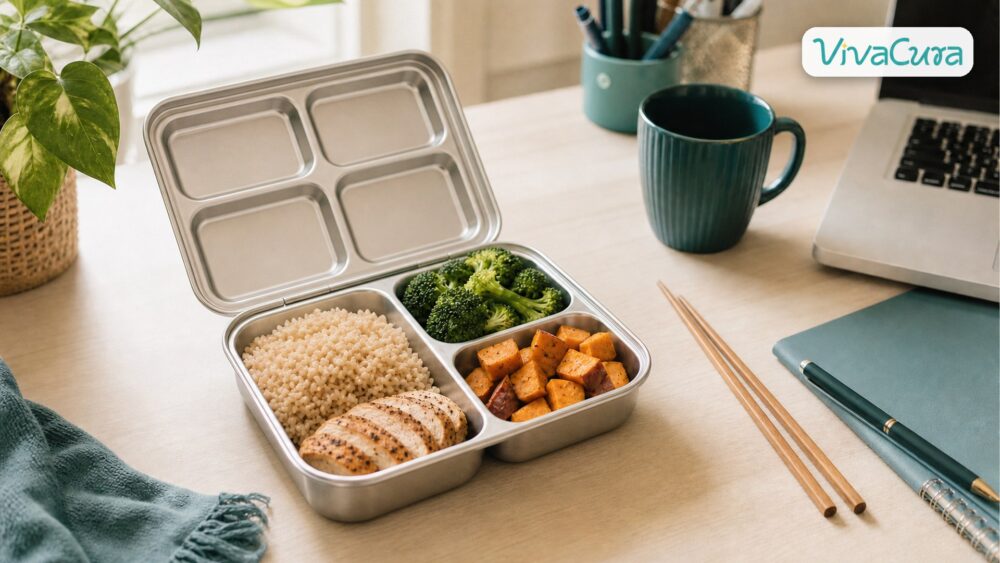
The secret to a healthy lunchbox was never eat less—it's divide it right. Remember one fist and one palm, and you've already beaten most of the calorie anxiety out there. If you pack lunch daily, a bento box with dividers sized to a balanced plate makes the habit even easier—tap the link below to see how it works.
Read more: Low-Salt, Low-Sugar Eating Out for the "Three Highs" (D4-001) ・ Beating Sarcopenia: Quality Protein for Older Adults (E4-031)
Sources: Introduction to Nutrition; Clinical Nutrition: Medical Nutrition Therapy; Weight Management; The Food Encyclopedia for a Healthy Body; plate-portion dietary guidance (Taiwan HPA "My Plate" / USDA MyPlate).