
Key takeaways
- What causes hot flashes and night sweats
- Spot and sidestep your personal triggers
- Layered clothing, room temperature, and sleep hygiene
- Movement, breathing, and weight management
- Diet and supplements: what the evidence says
- Warning signs that mean it's time to see a doctor
Waking at 2 a.m. drenched in sweat, then feeling irritable and drained all day, the vasomotor symptoms of menopause can make your body feel like it is no longer yours to steer. These changes are extremely common, and they do not mean you simply have to grin and bear it. Well before hormone therapy enters the conversation, there is a lot of evidence-based lifestyle care worth trying first.
What causes hot flashes and night sweats
As you move through menopause, the ovaries produce less estrogen, and the part of the brain that regulates body temperature becomes more sensitive. A tiny rise in core temperature can be misread as overheating, so the body triggers a cooling response: blood vessels near the skin widen, the face and neck flush, and you sweat. That is a hot flash; when it strikes at night and soaks your sleepwear, it is a night sweat. The same hormonal shift also nudges sleep and mood, which is why irritability, low spirits, and foggy focus often travel together.
Spot and sidestep your personal triggers
Triggers vary from person to person, but common ones include hot drinks, spicy food, alcohol, caffeine, stuffy rooms, and emotional stress. Try keeping a short diary for two to three weeks: note when a flash hits, what you were doing, and what you had eaten or drunk. Patterns usually surface. Once you know your most frequent triggers, ease off the easiest ones first rather than cutting everything at once, which is far more sustainable.
Layered clothing, room temperature, and sleep hygiene
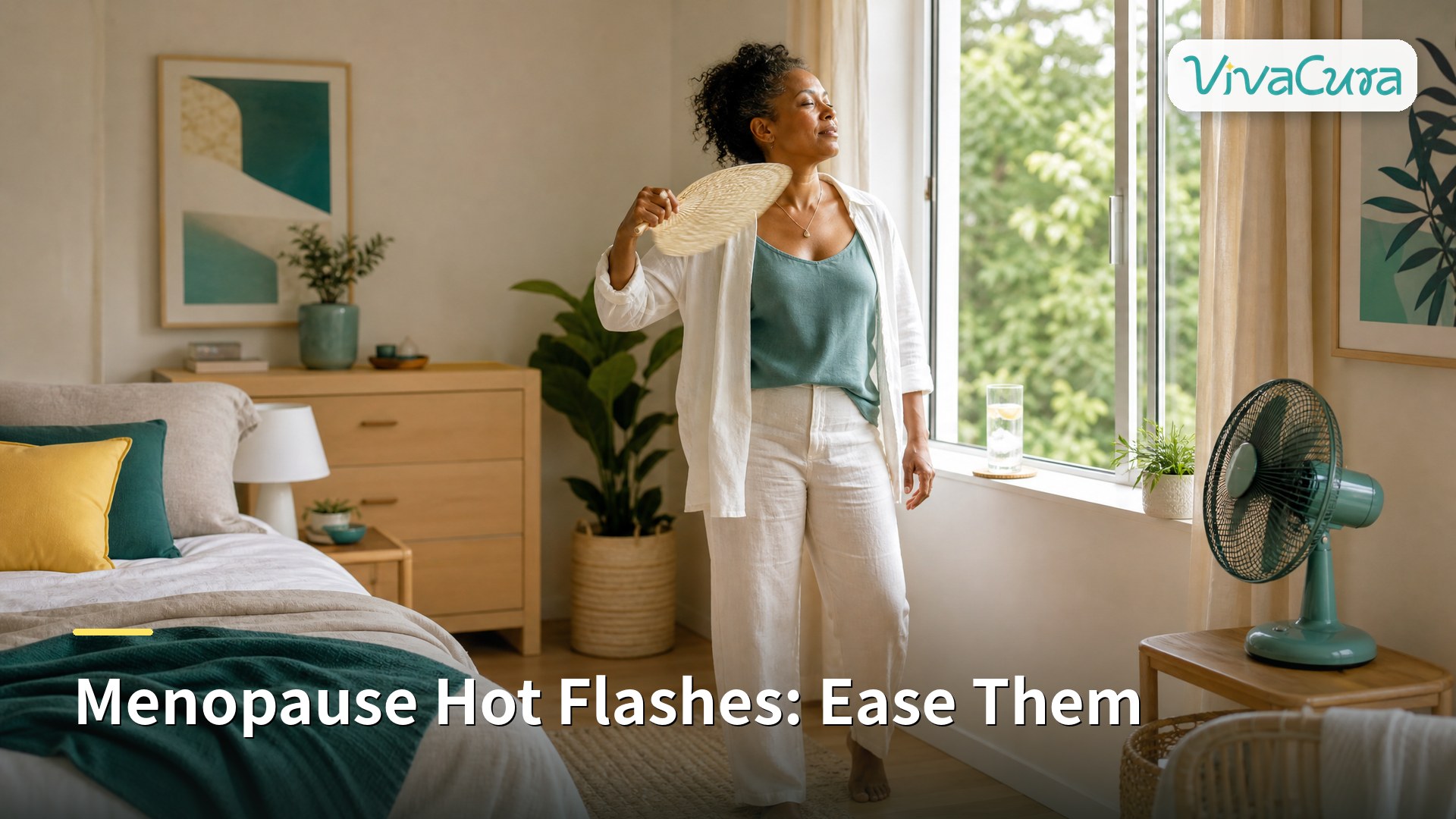
Dress in light, breathable layers, cotton or moisture-wicking fabrics, so you can peel one off the moment heat rises. Keep the bedroom cool with a fan and airy bedding, and skip very hot showers right before bed. Priya, a 49-year-old project manager, spent months losing sleep to sudden night sweats. After she lowered the thermostat a degree or two, parked a glass of iced water and a small fan by the bed, and set a steady bedtime, her night-time wake-ups dropped noticeably and her daytime energy steadied.
Movement, breathing, and weight management
Regular moderate exercise, such as brisk walking, swimming, or cycling for roughly 150 minutes a week, supports better sleep, mood, and overall health. When you feel a flash building, slow your breathing: a paced pattern of inhaling for 4 seconds and exhaling for 6 can calm an overstimulated nervous system. Staying within a healthy weight range also tends to ease symptom intensity, which makes movement and balanced eating a worthwhile long-term investment.
Diet and supplements: what the evidence says
A balanced plate rich in vegetables, whole grains, and soy foods is good for overall health, but no single food or supplement will erase symptoms on its own. Cutting back on alcohol and excess caffeine helps both sleep and flushing. As for supplements like soy isoflavones or black cohosh, the research is mixed, with modest and highly individual effects; if you take medication or have a chronic condition, check with your doctor or pharmacist before adding anything, to avoid interactions.
Warning signs that mean it's time to see a doctor
If symptoms seriously disrupt your work, sleep, and quality of life, or if low mood and loss of interest linger, do not tough it out alone, reach out for professional help. Pay special attention to abnormal bleeding: any bleeding after menopause, unusually heavy periods, or markedly irregular cycles deserves prompt evaluation. Hormone therapy works well for some people, but whether it suits you, and how to use it, is a decision for your doctor to make based on your personal profile and risks.
Bottom line

Menopause is a natural transition, and while vasomotor symptoms are disruptive, most can be eased by recognizing triggers, adjusting clothing and surroundings, moving regularly, and practicing relaxation. Give yourself time and patience to find the rhythm that fits. When you are ready to go a step further, VivaCura's women's care section has more evidence-based guides to keep you steady through every stage.
Further reading: For bone density and resistance training in menopause, see F5-070; for gentle stretching to soothe body and mind, see F5-069.
References: World Health Organization (WHO) "Menopause" fact sheet, The Menopause Society (NAMS) non-hormonal therapy position statement, and UpToDate clinical review on vasomotor symptoms of menopause.