

In this article
- Why the restlessness peaks at dusk: understanding sundowning
- Daytime habits that make nights easier
- Calming the evening: light, sound, and familiar things
- Preventing wandering: a home-safety checklist
- What to say and do when agitation rises
- Caregivers need care too: where to find help
As the light fades, a normally gentle parent may become anxious, insist on going out, or wander the house through the night, leaving families exhausted and unsure. This "fine by day, different by dusk" pattern is common in dementia. It is not defiance, and it is not your fault. Once you understand the causes and adjust the environment, sundowning and wandering become far easier to manage.
Why the restlessness peaks at dusk: understanding sundowning
Sundowning describes the shift in mood and behavior that many people with dementia show in the late afternoon and evening: agitation, irritability, pacing, or a wish to "go home." It is linked to a weakened body clock, too little daytime light and activity, fatigue, fading light, and evening noise. Seeing it as a symptom rather than a choice takes real pressure off you.
Daytime habits that make nights easier
A steady body clock is built during the day. Offer morning daylight, a walk or simple activity in the afternoon, and keep naps under 30 minutes and away from evening. Move caffeine and sweets to the morning. The more regular the day, the steadier the night usually is.
Calming the evening: light, sound, and familiar things
Dusk is the key window, and the aim is to keep the setting familiar rather than strange and stimulating. Turn lights on before dark to cut shadows and glare, lower the television volume, and avoid several people talking at once. Familiar music, a favorite cushion, or old photos all add a sense of safety.
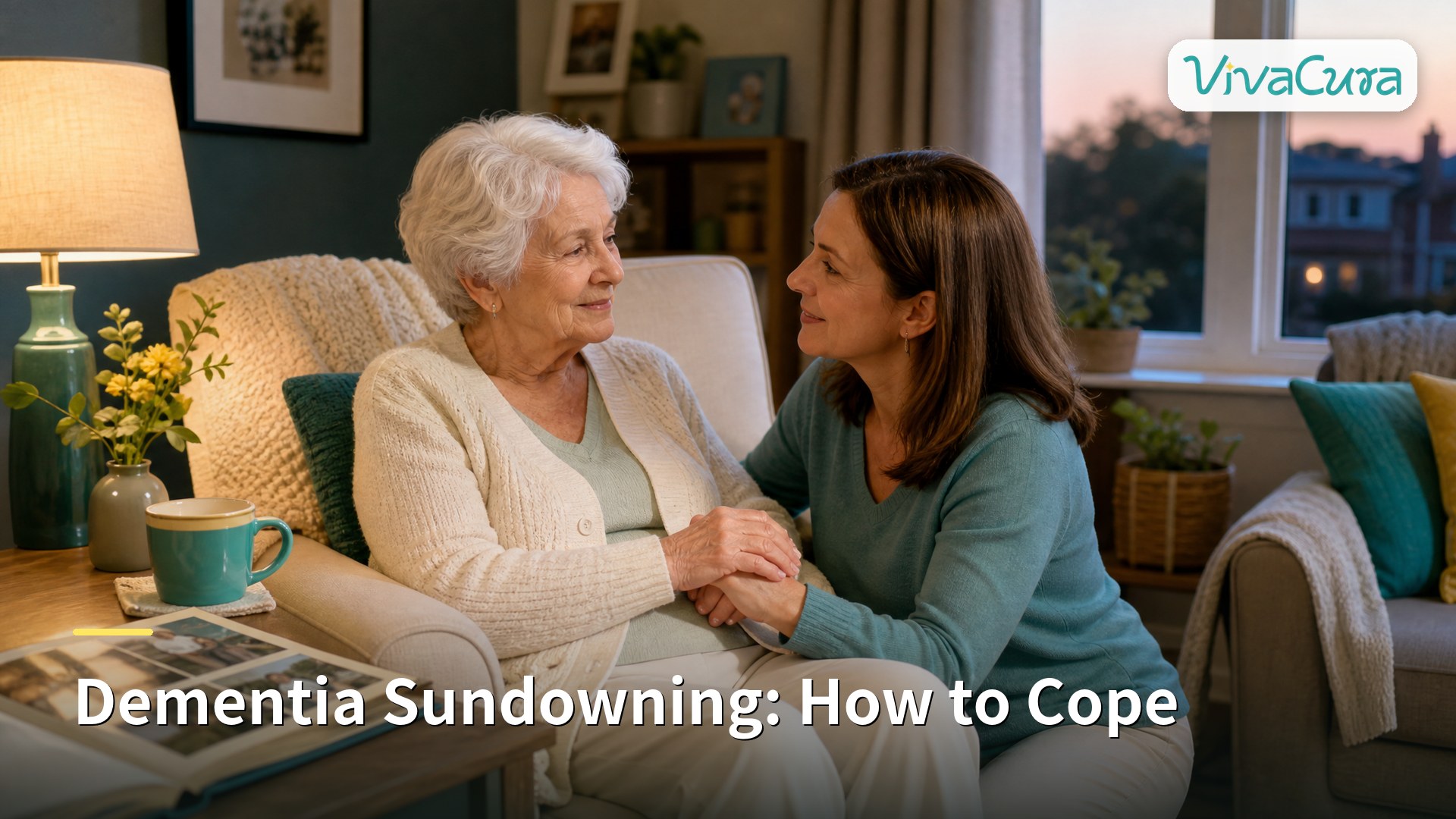
At 78, Mrs. Chen grew insistent every day at five that she had to "pick up her grandson from school." Rather than correcting her, her daughter learned to brighten the living room, warm a cup of milk, and sit with her over the grandson's photo album. Once the feeling was met, the urgency to leave usually eased on its own.
Preventing wandering: a home-safety checklist
Wandering cannot be fully stopped, so the goal is that movement stays safe and, if the door is reached, the person can be found. Add a chime or sensor bell at the entrance, place a second lock out of easy reach, and put keys away. Keep floors clear of cords and loose rug edges, and leave a night light along the path to the bathroom. Prepare an ID bracelet or clothing label with a name and phone number, and let neighbors know, so a search can start fast if needed.
What to say and do when agitation rises
When agitation builds, steady your own tone and face first. Do not argue or correct the facts. Answer the feeling in a few words ("I'm here, don't worry"), go with their emotion, then gently steer toward a familiar activity or snack. Lowering your voice, slowing down, and offering reassuring touch often work better than reasoning.
In closing

Sundowning and wandering test a family's stamina and heart far more than anyone's rights or wrongs. Setting up the day, the evening, and the home step by step helps your loved one settle and gives you room to breathe. VivaCura has more practical checklists and companion guides for senior care, so read on with us when you are ready.
Further reading
To support the brain through nutrition, see E4-035 "Vitamin B12 and Cognition: Should Seniors Supplement?"; if swallowing trouble or slow eating is also an issue, E4-032 "Swallowing Difficulty and Diet Adjustments for Seniors" will help.
References: World Health Organization (WHO), "Dementia" fact sheet; U.S. National Institute on Aging (NIA), "Alzheimer's and Dementia — Tips for Coping with Sundowning"; Alzheimer's Association, "Sleep Issues and Sundowning"; Hazzard's Geriatric Medicine and Gerontology.