

In this article
- Why do knees stiffen up when it gets cold?
- Three autumn basics: warm up, keep warm, keep moving
- Four home strength moves: low-impact and gradual
- Body weight and joint load: every kilo counts
- Moves to avoid and red flags to watch
When autumn arrives and the day-to-night temperature gap widens, many older adults wake up to stiff, creaky knees that make sitting down and standing up a chore. Knee osteoarthritis naturally feels worse as temperatures drop and activity fades. The good news: sensible warmth plus regular home strength work can keep your knees far more cooperative through the cooler months.
Why do knees stiffen up when it gets cold?
Knee osteoarthritis is the gradual wear of joint cartilage with age and use, along with inflammation and stiffness in the surrounding tissue. In cooler weather, muscles and tendons are less supple and joint fluid is thicker, so that first step out of bed feels tight and sore. Because people also tend to move less when it is cold, the joint gets even stiffer. This matters: the stiffness usually is not fresh damage but poorer circulation and less movement, which warmth and gentle activity can improve.
Three autumn basics: warm up, keep warm, keep moving
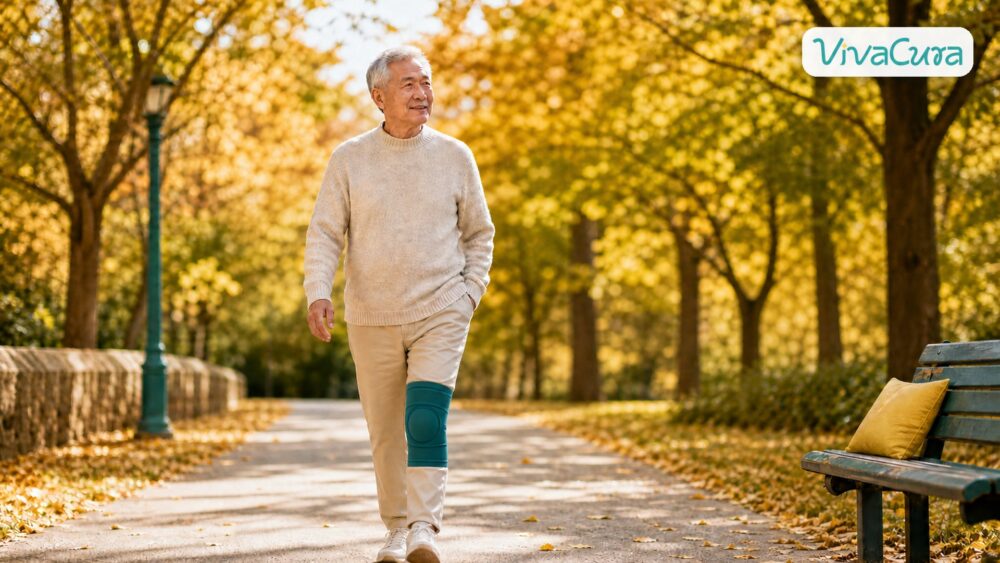
First, warm up for 5 to 10 minutes before any activity, marching in place or walking slowly to let the knee ease into work. Second, wear a knee sleeve or long trousers outdoors, and try a warm soak or a comfortable heat pack before bed to relax the joint (keep the temperature gentle to avoid burns). Third, do not sit still for long; every 30 to 40 minutes, stand, walk a little, and bend the knees a few times so the joint does not seize up.
Mrs. Sharma, 72, used to curl up on the sofa all autumn, and her knees grew stiffer the longer she sat. Her physiotherapist suggested she stand and walk a lap during every commercial break and lift her legs while holding the chair back. Two weeks later she said getting out of bed in the morning felt far less locked up.
Four home strength moves: low-impact and gradual
A strong quadriceps works like a built-in knee brace, sharing the load on the joint. These four moves are low-impact and easy to do at home. Aim for 10 to 15 repetitions, 1 to 2 rounds a day, within your comfort:
- Quad set: Sitting or lying down, place a small rolled towel under the knee, press the back of the knee down and tighten the front thigh, hold 5 seconds, then relax.
- Straight-leg raise: Lie flat, bend one knee with the foot on the floor, keep the other leg straight and lift it about 20 to 30 cm, hold 2 to 3 seconds, and lower slowly.
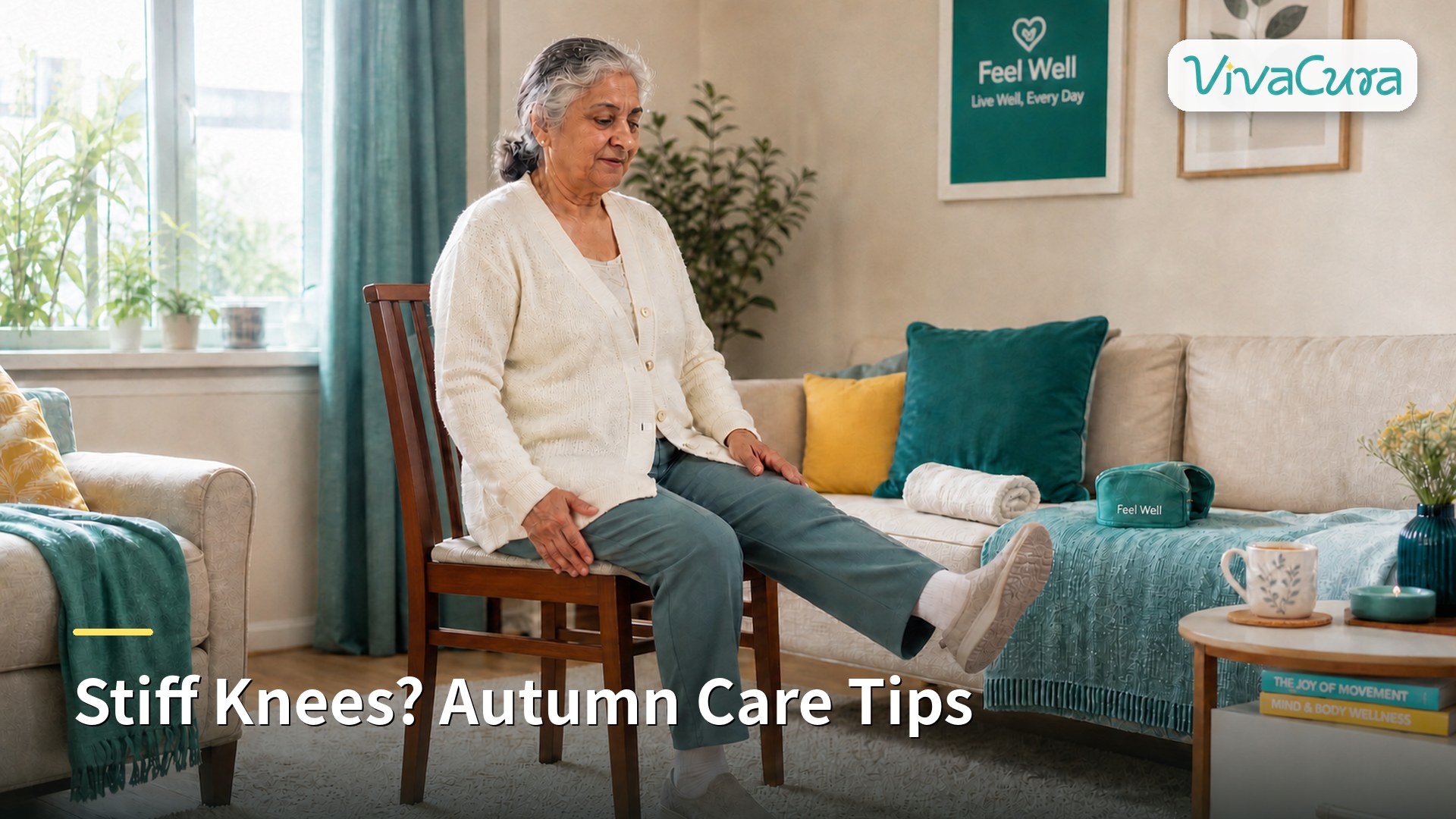
- Seated leg extension: Sit tall in a chair, slowly straighten the lower leg to nearly full extension, pause, then lower without swinging.
- Wall slide: Stand with your back to a wall, feet shoulder-width apart, slide down until the knees bend slightly (not past the toes, not below 45 degrees), hold a few seconds, and rise.
Work to the point of a tolerable ache that is no worse the next day. If a move leaves the joint swollen or painful, cut back or pause it.
Body weight and joint load: every kilo counts
With each step, the knee bears several times your body weight, so every extra kilogram magnifies the load. Studies show that modest weight loss for those who are overweight noticeably eases knee pain and improves walking. Go easy on rich autumn meals, get enough protein to maintain muscle, and choose low-impact options like swimming or a stationary bike to be kinder to your knees.
Moves to avoid and red flags to watch
Deep squats, kneeling, steep climbs, and long stretches of stairs put heavy shear force on a worn knee, especially to be avoided during a painful flare. Build up gradually rather than adding too much at once. See a doctor promptly if you notice these red flags: a clearly red, hot, swollen knee; a joint that locks and cannot straighten; sudden inability to bear weight or severe pain; steady worsening after weeks of rest; or pain with a fever. These may be more than osteoarthritis and need a professional assessment.
In closing: You do not have to endure stiff knees until winter. Fold warmth, a warm-up, and the four strength moves into small daily habits, build up slowly, and walking and standing should start to feel easier. If you want a fuller plan for muscle and bone through diet and exercise, VivaCura's care notes will walk alongside you, step by gentle step.
Further reading: To keep muscle and prevent sarcopenia, see E4-031 on getting protein right; to build bone density with resistance training, see F5-070 on training for stronger bones.
References: World Health Organization (WHO) resources on musculoskeletal health and osteoarthritis; American Academy of Orthopaedic Surgeons (AAOS) clinical guideline on knee osteoarthritis; Osteoarthritis Research Society International (OARSI) recommendations for non-pharmacological management of knee osteoarthritis; Guccione's Geriatric Physical Therapy.