

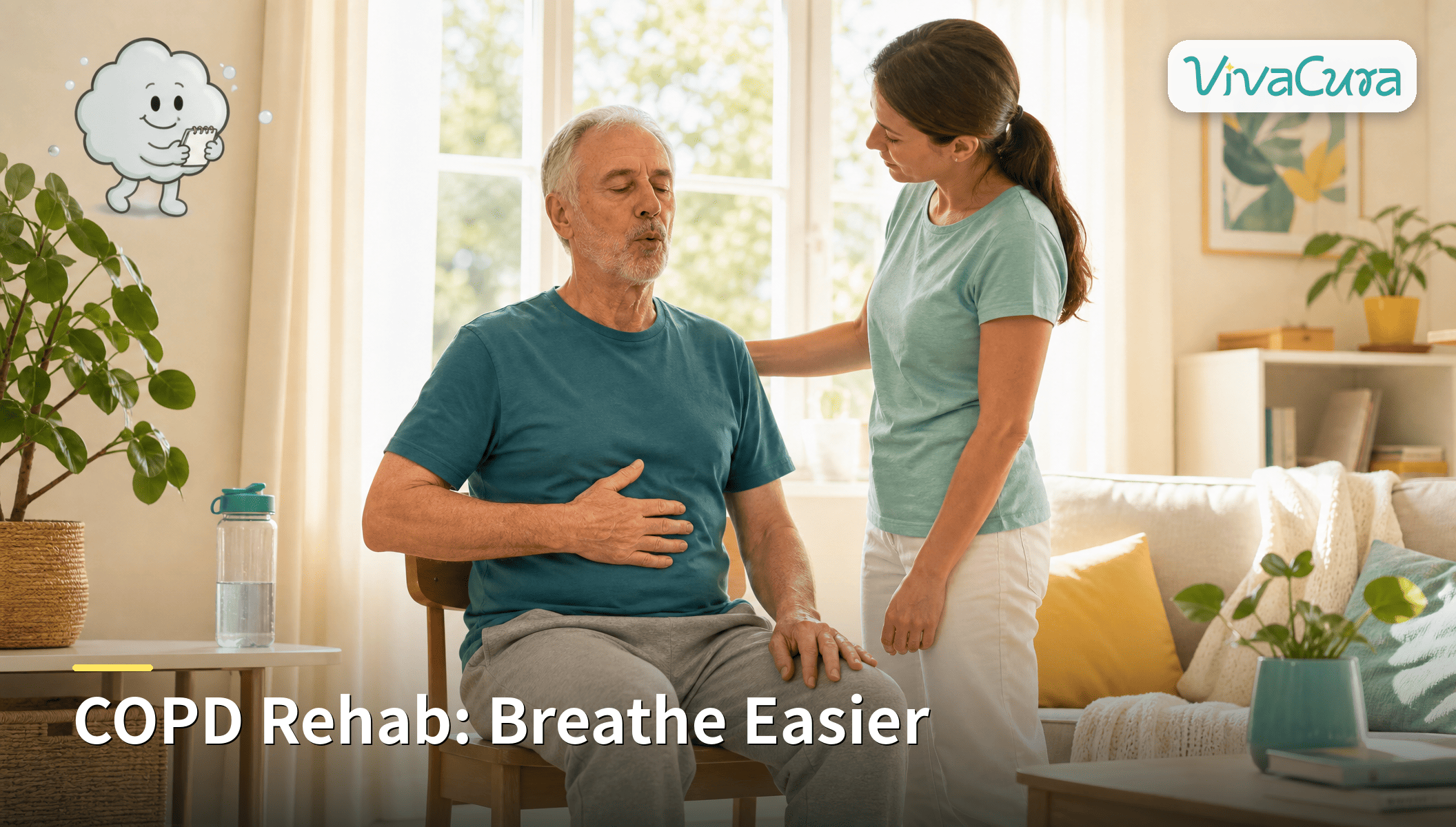
Getting winded after a few steps, stopping halfway up the stairs—many people with COPD end up moving less and less because of it. But the less you move, the faster your muscles and stamina decline, creating a vicious cycle. Pulmonary rehabilitation is about rebuilding that fitness, the right way, one step at a time. Why “moving” beats “resting” with COPD In COPD, chronically inflamed, narrowed airways make exhaling harder and activity more breathless. Yet long stretches of inactivity waste the limb muscles and cut cardiorespiratory endurance—leaving you more breathless still. Research shows regular pulmonary rehab improves exercise tolerance and quality of life and can reduce hospital stays. The key is progressing gradually, not pushing through. Pursed-lip breathing: reset your rhythm Pursed-lip breathing is the most practical tool: breathe in slowly through the nose for about 2 seconds, then purse your lips as if blowing out a candle and exhale gently for about 4 seconds. The longer exhale helps keep the airways open and reduces air trapping, easing that breathless feeling. Use it on stairs, when lifting, or whenever breathlessness spikes. Diaphragmatic breathing: put your diaphragm to work Diaphragmatic breathing trains the diaphragm, your main breathing muscle. Place one hand on your chest and one on your belly; as you inhale, feel the belly rise while the chest stays still, and let the belly fall on the exhale. A few short sessions a day reduce overuse of the neck and shoulder muscles, making each breath more efficient. Interval aerobics and upper-body training Start aerobic work with brisk walking or a stationary bike, using intervals: move for 1–2 minutes, rest for 1. Spreading the effort out is easier to sustain than one exhausting push. Upper-body training—light dumbbells or resistance bands—supports everyday tasks like dressing and reaching. Aim for an intensity where you can still speak in short sentences but not sing. A retired carpenter’s routine Walter, 72, a retired carpenter, was so breathless after his COPD diagnosis that even reaching the yard left him panicked. Guided by his therapist, he began with 5 minutes of pursed-lip breathing and indoor marching each day. Two months on, he could finish the whole walking path. The biggest change, he says, wasn’t the breathlessness—it was that he “felt able to go out again.” Exercise safety: when to stop Warm up first and keep a short-acting bronchodilator handy. Stop and seek care if you feel severe breathlessness, chest pain, dizziness, blue-tinged lips, or a clear drop in oxygen levels. Before starting any program, have a doctor or respiratory therapist assess you and tailor it to your lung function. In closing Pulmonary rehab isn’t a sprint to a finish line—it’s a little added up each day. Find a pace that fits you, pair it with the right breathing techniques, and breathlessness can gradually become something you manage. Want to make home practice safer and simpler? See our caregiver picks below. Read more: Stroke Recovery at Home: Rebuilding Daily Function (G5-098) ・ Early Intervention for Developmental Delay: At-Home Sensory Play (G5-097) #COPD #PulmonaryRehab #PursedLipBreathing #BreathingExercises #COPDCare #HomeCare References: ATS/ERS Statement on Pulmonary Rehabilitation; GOLD Global Initiative for Chronic Obstructive Lung Disease report; The Merck Manual of Medical Information.