

In this article
- Why bones weaken after menopause
- Why resistance training, not just walking
- Progressive overload: from bodyweight to dumbbells
- A real example: a first try at lifting after menopause
- Resistance training is also fall prevention
- Safety notes before you start
Has the bone-density number on your check-up quietly slipped since menopause began? It's a milestone many women face. The good news: bone responds to being used—and resistance training is one of the most powerful ways to protect it.
Why bones weaken after menopause
Around menopause, estrogen drops sharply, and estrogen normally helps protect bone and slow its breakdown. Without that protection, bone is broken down faster than it's rebuilt, so bone density falls more quickly, raising the risk of osteoporosis and fractures.
This isn't an inevitable part of aging—it's a stage you can act on.
Why resistance training, not just walking
Walking is great for your heart and mood, but its stimulus to bone is relatively mild. Bone follows a "use it or lose it" principle: when muscles pull on bone under enough mechanical load, it signals the bone to grow denser.
Resistance training also builds muscle—and strong muscle is what protects joints and keeps you steady.
Progressive overload: from bodyweight to dumbbells
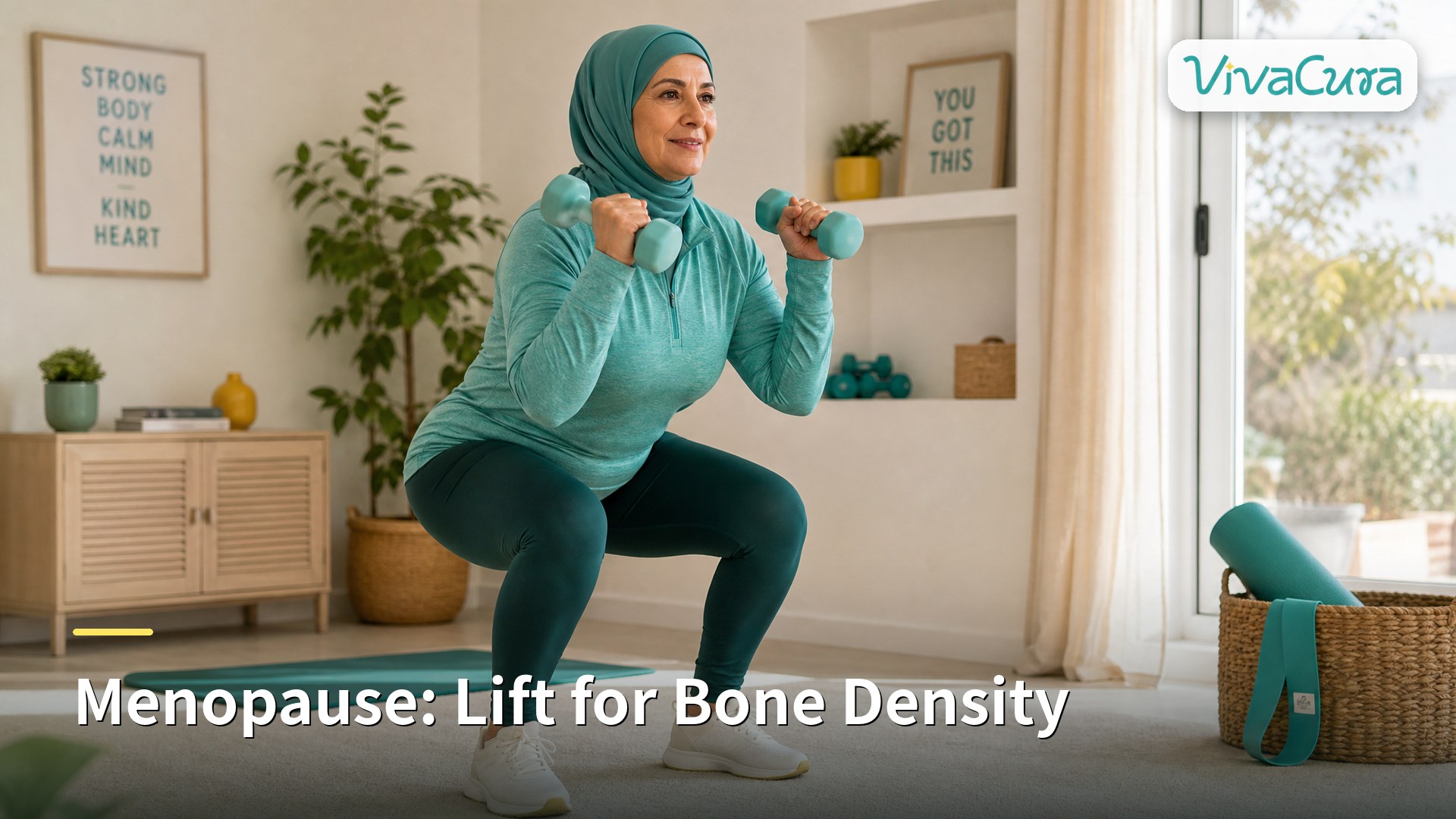
The principle is to progress gradually. Start with bodyweight squats, sit-to-stands, and wall push-ups; once those feel easy, add resistance bands, dumbbells, or kettlebells. Aim for two to three sessions a week, working large muscle groups—legs, glutes, back, and core.
When a given weight feels easy, nudge it up slightly, so the bone keeps getting an effective stimulus.
A real example: a first try at lifting after menopause
Ms. Huang, 52, was told her bone density was low after menopause, and at first she feared lifting would hurt her. With a coach's guidance she began with bodyweight squats and light dumbbells, slow and with good form first. Six months later, she said the biggest gain wasn't just the number: "Carrying groceries and climbing stairs feel steadier, and I have more energy."
She didn't do anything extreme—she simply added load, a little at a time, consistently.
Resistance training is also fall prevention
For women after menopause, preventing falls matters as much as protecting bone. Resistance training builds strength and improves balance and reaction time, so you're steadier the moment you misstep or slip.
With stronger muscles and better balance, even if you do fall, the risk of injury and fracture may be lower.
Safety notes before you start
If you already know your bone density is low or have a history of osteoporosis, check with a doctor first, and arrange a bone-density (DXA) scan if needed. Prioritize good form, avoid holding your breath, and add load gradually—ideally with professional guidance. Alongside training, keep up calcium and vitamin D and sensible sun exposure for more complete bone support.
Start with a weight you can manage; safety and consistency are what count.
In closing

Menopause isn't the start of a decline—it's a good moment to rebuild your foundation. Regular resistance training to stimulate bone and build strength, paired with balanced nutrition and fall awareness, can keep your bones sturdier. Looking for beginner-friendly resistance bands, light dumbbells, or good calcium and vitamin D options for home? We've gathered a few gentle, easy-to-start picks below.
Read more: Wave Goodbye to Mommy's Thumb and Tennis Elbow (F5-068) ・ Period Stretches: Easing Cramps and Lower-Back Heaviness (F5-069)
Sources: Exercise Physiology; Prevention and Management of Osteoporosis; World Health Organization (WHO) physical activity guidelines and American College of Sports Medicine (ACSM) recommendations on resistance training and bone health.