


In this article
- Why color is the simplest nutrition guide
- Red and orange: lycopene and beta-carotene
- Yellow and green: lutein, vitamin C, and folate
- Blue-purple and white: anthocyanins and sulfur compounds
- A real example: one takeout regular's rainbow makeover
- 3 rainbow habits to start today
Stuck on what vegetables to eat each day? Instead of memorizing a long list of nutrient names, remember one thing: add more colors to your plate. Different-colored fruits and vegetables carry different phytonutrients and vitamins, and eating a variety supports normal immune function. That's the "eat the rainbow" idea—the most intuitive nutrition guide there is.
Why color is the simplest nutrition guide
The colors of produce come from different phytonutrients. The more varied the colors, the wider the range of antioxidants and nutrients you take in.
No need to count grams—just ask: how many colors are on my plate today?
Red and orange: lycopene and beta-carotene
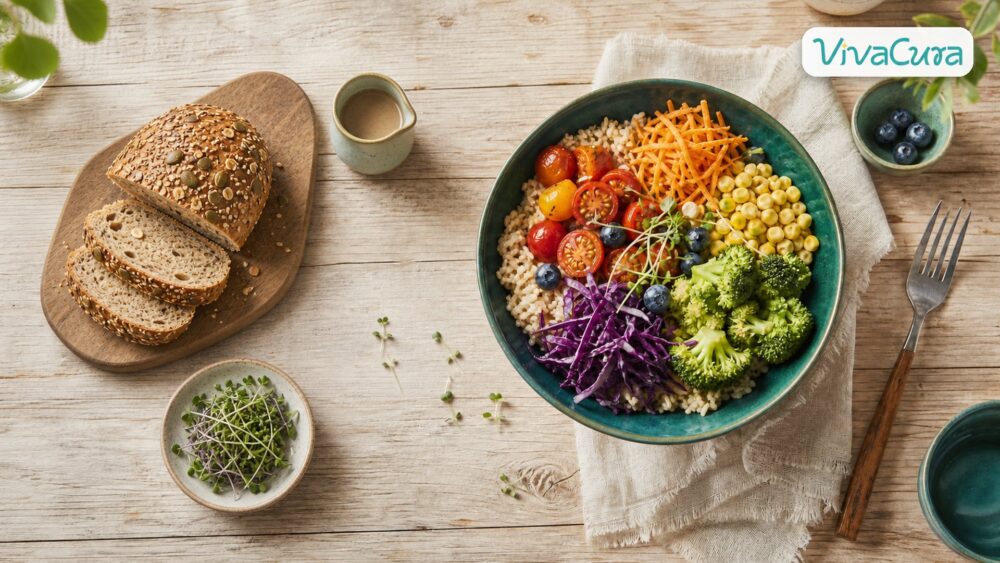
Red tomatoes and red peppers offer lycopene; orange carrots, sweet potato, and pumpkin are rich in beta-carotene, a building block for vitamin A, which supports healthy skin and mucous membranes.
Tip: lightly heating tomatoes with a little oil makes lycopene easier to absorb.
Yellow and green: lutein, vitamin C, and folate
Yellow peppers and corn provide lutein; dark green broccoli and spinach deliver vitamin C, folate, and fiber together. Vitamin C is a well-known and important antioxidant nutrient.
Dark greens are the all-purpose base of any rainbow plate—you can hardly have them too often.
Blue-purple and white: anthocyanins and sulfur compounds
Blue-purple blueberries, eggplant, and purple cabbage carry anthocyanins; white onion, garlic, and daikon offer sulfur compounds. These two groups are easy to overlook but round out your plate's phytonutrient range.
A good goal: let all five color groups show up at least once within a week.
A real example: one takeout regular's rainbow makeover
Ms. Chen ate mostly convenience-store meals, and for a long time her only produce was lettuce and tomato. She started deliberately "adding one new color per meal": blueberries one day, purple sweet potato the next, bell peppers after that. Two weeks in, she said the biggest change was smoother digestion and steadier energy.
She didn't overhaul her diet. She just added color.
3 rainbow habits to start today
First, hit at least three colors per meal. Second, cover red, orange, yellow, green, blue-purple, and white across a week. Third, make dark green vegetables your daily regular.
Start by counting the colors in today's lunch.
In closing
Immune health isn't built on a single "superfood"—it comes from a varied, balanced diet over time. Rather than chasing one star ingredient, keep your plate colorful every day. Want to make prep and portioning easier so eating the rainbow actually sticks? See our picks below.
Read more: Preventing Chronic Inflammation: 10 Antioxidant Foods (D4-004) ・ The Healthy Lunchbox: Carbs vs. Protein (D4-003)
Sources: Introduction to Nutrition; The Complete Encyclopedia of Nutrients; The Food Encyclopedia for a Healthy Body; Taiwan HPA "5 servings of fruits and vegetables a day" guidance.