


In this article
- What sarcopenia is and why seniors should pay attention
- How much protein older adults really need each day
- Quality protein choices on the Taiwanese table
- Spreading protein across meals and pairing it with exercise
Climbing stairs starts to feel harder, wringing a towel takes more effort, and the scale barely moves even as muscle quietly slips away. This is not simply "getting old" — it may be sarcopenia. The encouraging news is that with the right protein and a little movement, muscle can often be protected.
What Is Sarcopenia, and Why It Matters
Sarcopenia is the age-related loss of muscle mass, strength, and physical function occurring together. After about age 40, adults lose roughly 8% of muscle per decade, and the decline speeds up after 60. As muscle fades, walking slows, falls become more likely, and recovering from illness takes longer. The reassuring part is that sarcopenia is not a one-way street — diet and exercise remain the two most practical keys.
Eat Enough Protein, and Choose Well
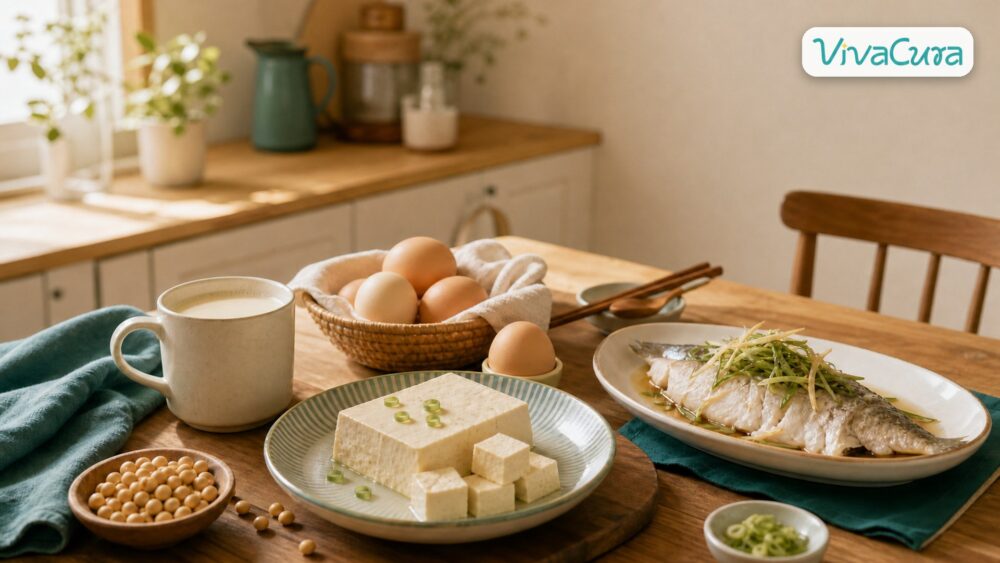
Many seniors assume aging means eating light and skipping meat, which quietly leaves them short on protein. In fact, healthy older adults are advised to aim for about 1.0 to 1.2 grams of protein per kilogram of body weight each day, higher than the 0.8 grams suggested for younger adults; during illness or recovery, needs may rise further. For a 60-kilogram elder, that is roughly 60 to 72 grams a day. Favor "quality protein" — foods with complete essential amino acids that are easy to digest. The Taiwanese table offers many friendly options: a warm cup of soy milk, an egg, the fish in a bowl of fish soup, soft tofu, lean meat, and dairy.
Spread It Across Three Meals
The same amount of protein usually stimulates muscle building more effectively when spread across meals rather than piled into one. Research suggests about 20 to 30 grams per meal, including breakfast, rather than relying on the evening plate alone. Take Grandma Chen, 72: after retiring she lived on plain congee and felt too weak to carry a grocery basket. On a dietitian's advice, she added an egg and a cup of soy milk at breakfast and a portion of fish or tofu at lunch and dinner. Three months later, stairs felt noticeably easier. Steamed egg, fish soup, and braised tofu made in an electric cooker are easy to prepare and gentle to eat.
Movement Matters, Plus a Few Cautions
Protein alone is not enough — muscle follows a "use it or lose it" rule. Pairing intake with regular resistance exercise, such as seated leg raises, resistance-band work, or gentle squats, helps the protein you eat become real muscle. Do not forget vitamin D: moderate sunlight along with fish and egg yolk supports both muscle and bone. One important reminder: seniors with reduced kidney function must follow their doctor's or dietitian's guidance on protein and should not sharply increase it on their own. For those with swallowing difficulty, food texture needs adjusting for safety.
A Warm Closing
Muscle is the foundation of a senior's independent, comfortable life. Boosting protein need not be expensive or complicated — eating enough of the right foods across three meals, plus a little movement, is the gentlest form of care. If you are planning meals for an older loved one, explore the nutrition column in VivaCura's Cura Care Notes, or consult a registered dietitian to tailor meals that suit them.
Further reading
- Texture Modification and Diet Levels for People with Swallowing Difficulty
- Calcium Beyond Milk: Foods to Help Seniors Guard Against Osteoporosis
Hashtags
References
- Health Promotion Administration, Ministry of Health and Welfare, Taiwan
- PROT-AGE Study Group, JAMDA (2013)
- ESPEN Expert Group consensus on protein intake and exercise
- Taiwan Association of Gerontology and Geriatrics